As a specialist wildlife veterinary surgeon, Dr Romain Pizzi has travelled the globe operating on almost every species you can think of - and some you won’t have heard of.
Romain’s species expertise ranges from tree snails to elephants. An international expert in wildlife surgery, he has carried out numerous world first wildlife operations in endangered wild animals, from the first laparoscopic procedure in wild orangutans, to the first neurosurgical intervention on a wild bear.
His long association with wildlife means his life is brim full of memorable moments, “but some of them are memorable for all the wrong reasons”, he says.
He recalls the time he was conducting the world’s first robotic-assisted operation on a wild animal - a ‘rescue’ tiger, that had been badly treated and had been rehomed by a zoo. “Halfway through the operation the tiger lifted its head and had a look at me - thankfully we were able to get it back to sleep”.
And that’s not the first time this has happened. “I was doing surgery on a bear in Vietnam, had finished operating and was just suturing up, when it started to wake up on the table. So with the bear on a stretcher, we ran through the jungle to its enclosure at the rescue centre.”
There have been many other memorable cases over the years, including the first laparoscopic surgical removal of diseased gallbladders in moon bears rescued from illegal bile farms in Vietnam, the first key-hole surgery on a reindeer at Edinburgh Zoo, and the first locking plate femur fracture repair on an animal, which was conducted on an infant chimpanzee in Sierra Leone.
No one month is the same for Romain - he could be anaesthetising a fish, x-raying a frog, or performing an endoscopy on a shark. He travels extensively, working with conservation charities, wildlife rescue and rehabilitation centres and zoos across the world.
Romain’s patients may often be unusual and exotic, but that is not why he chose his specialty. “Like most surgeons, the most rewarding thing is to have a good outcome for the patients,” says Romain. “People imagine operating on an elephant, giant panda or tiger is very exciting, but that’s because they find the animal interesting. Just as for any ‘human’ surgeon, this work is fulfilling to me because it’s about making patients better - whether it’s a tiger or a small squirrel monkey.”

A life working with wild animals was not Romain’s first choice of career. As a small child, he was “quite sickly and I spent some time in hospital, so I wanted to become a paediatrician”.
Growing up in South Africa, he was “surrounded by really interesting animals” and in high school “I hand reared orphaned and injured birds at home”. “This was really satisfying, and I thought: ‘maybe I should be a vet’. He also wanted to work with endangered wild animals “where you can have a real impact in terms of anything you can do to improve their lives”.
Romain did his veterinary degree in South Africa. Since qualifying in 1999, he has taken a Masters in London, a PhD researching key hole surgery in Barcelona, and specialist exams through the Royal College of Veterinary Surgeons, where he has also received a fellowship.
He finds watching paediatric surgeons at work ‘very selfless - their patients can be challenging, so there are actually quite a lot of similarities between their work and mine’
After doing a variety of wildlife work in general veterinary practice, and working in India with endangered vultures, by 2005, Romain had become a specialist in wildlife medicine. He then started to approach surgeons to observe their work to inform his practice. “Human surgery is much more developed and specialised than veterinary surgery and often its techniques take time to trickle down to the veterinary community, so it made sense to learn them at source,” he says.

For a quarter of a century, Romain has been building his expertise, training with many surgeons, and learning in particular about laparoscopic surgery - he is an honorary life member of the Association of Laparoscopic Surgeons of Great Britain. Many surgeons have influenced his work, and he finds watching paediatric surgeons at work “very selfless - their patients can be challenging, so there are actually quite a lot of similarities between their work and mine”.
His many role models from the natural world include the English primatologist and anthropologist Dame Jane Goodall, “who has worked selflessly to educate people about the need for conservation”.
Unlike ‘human’ surgeons who typically specialise, his practice involves “doing a little bit of everything”. And his patients present very different challenges and considerations to those faced by surgeons working in human hospitals.
Bedrest post operation is not an option with animals, he says. “You can’t keep an animal in bed when you’ve removed their gallbladder. An orangutang with a broken arm is still going to want to hang on that arm all day. And some patients, like sea lions or beavers, need to go straight back in the water. So it can be taxing to make sure my patients don’t do themselves harm, and that they are able to heal.”
He is constantly looking at different ways to achieve this, adapting surgical techniques for his wildlife patients, conducting minimally invasive surgery performed through wounds as small as 3mm - the same size as a microchip needle - or choosing different implants or locking plates and screws.
Surgical instruments are expensive, and so over the years he has “begged, borrowed, and bought equipment second hand”. After carrying out several thousand keyhole operations on wild animals over the decades, “I now have quite a caseload”, he says.
He generally travels with a 20kg suitcase of equipment to perform procedures. “You have to think very carefully about every single instrument you take, to have everything you will possibly need,” he says.
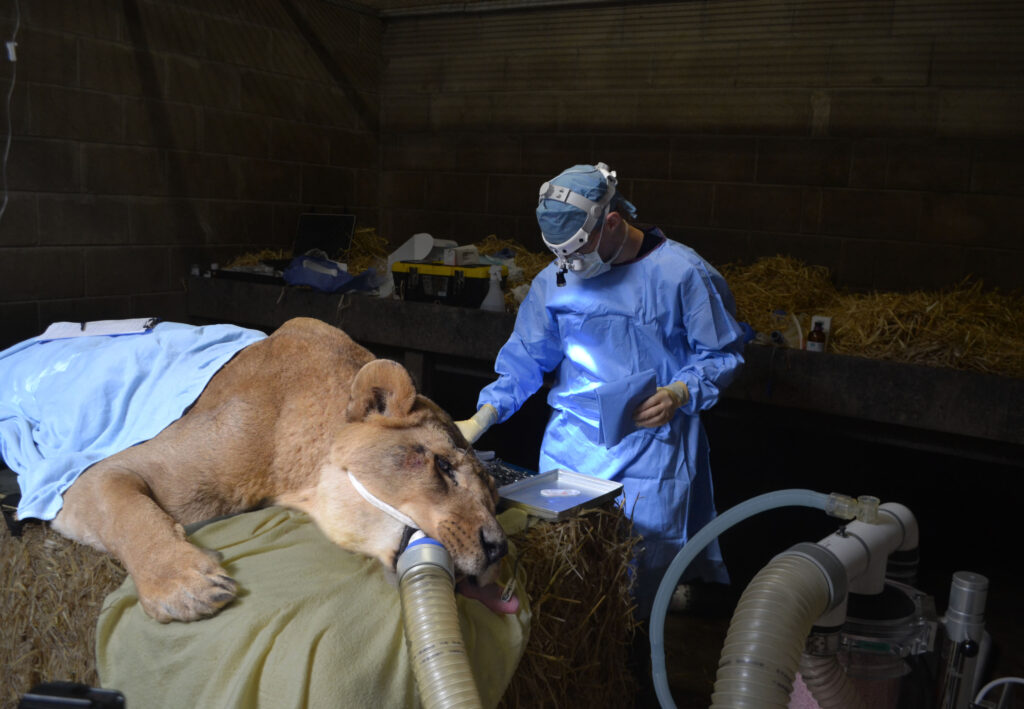
Operating conditions are a far cry from human, or veterinary hospitals, he explains, and he can find himself working in a shed, tent, or barn, on an operating table made out of bags of straw. In some countries, where conditions are fraught, he has been forced to smuggle instruments hidden in rice bags across borders, dodged secret police, and even been shot at.
Some of the animals he treats are critically endangered, like the hairy nosed otter at a rescue centre in Cambodia, the Socorro dove in Mexico, or the Polynesian snails that are now completely extinct in the wild. “When you treat these animals you know you’re making a difference not just to them, but also to the survival of an entire species,” he says. “Sometimes there’s a lot of pressure - you’re learning things for the first time and figuring out what will and won’t work, but overall it’s rewarding.”
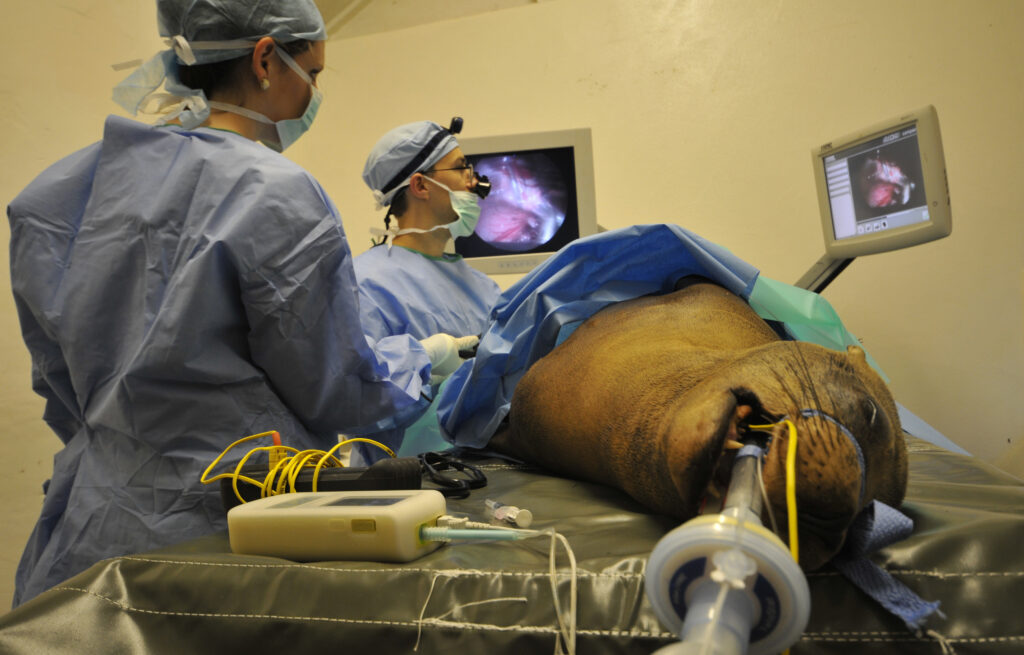
He recalls just a few of the many rewarding moments he has experienced during the course of his career. Travelling to a sanctuary in northern Laos to perform the world’s first neurosurgical intervention on a Champa, an Asiatic black bear with hydrocephalus. Performing keyhole surgery one Christmas on ‘Eskimo’, a reindeer at Edinburgh Zoo to remove an undescended testis. And removing a metal nail lodged in the appendix of a wild Bornean orangutang using laparoscopic surgery, who after many months of recovery was then released back into the wild.
“The orangutang went on to foster a baby, and five years on they’re both doing great. Its deeply satisfying knowing that the orangutang who almost died is now happy and healthy with a baby of her own - it makes everything worthwhile,’ says Romain.
Of course, not all these stories have a happy ending. “There’s always those patients where you think about whether you could have made different decisions, or tried an operation slightly differently. But you try and learn from these experiences - sometimes there’s only so much you can do,” he says.
Sharing with others the benefit of his experiences, Romain trains wildlife veterinarians working in more than 30 countries, with everything from bears to orangutans, building local capacity and expertise to best treat confiscated wildlife as fast as possible.
When not traveling the globe, home is Roslin, a small village outside Edinburgh, where he lives with his specialist vet cardiologist wife and two children. He doesn’t have any pets - “when you’re travelling a lot with work I don’t think it’s fair on the animal, but maybe I’ll have a pet when I’m older”, he says.
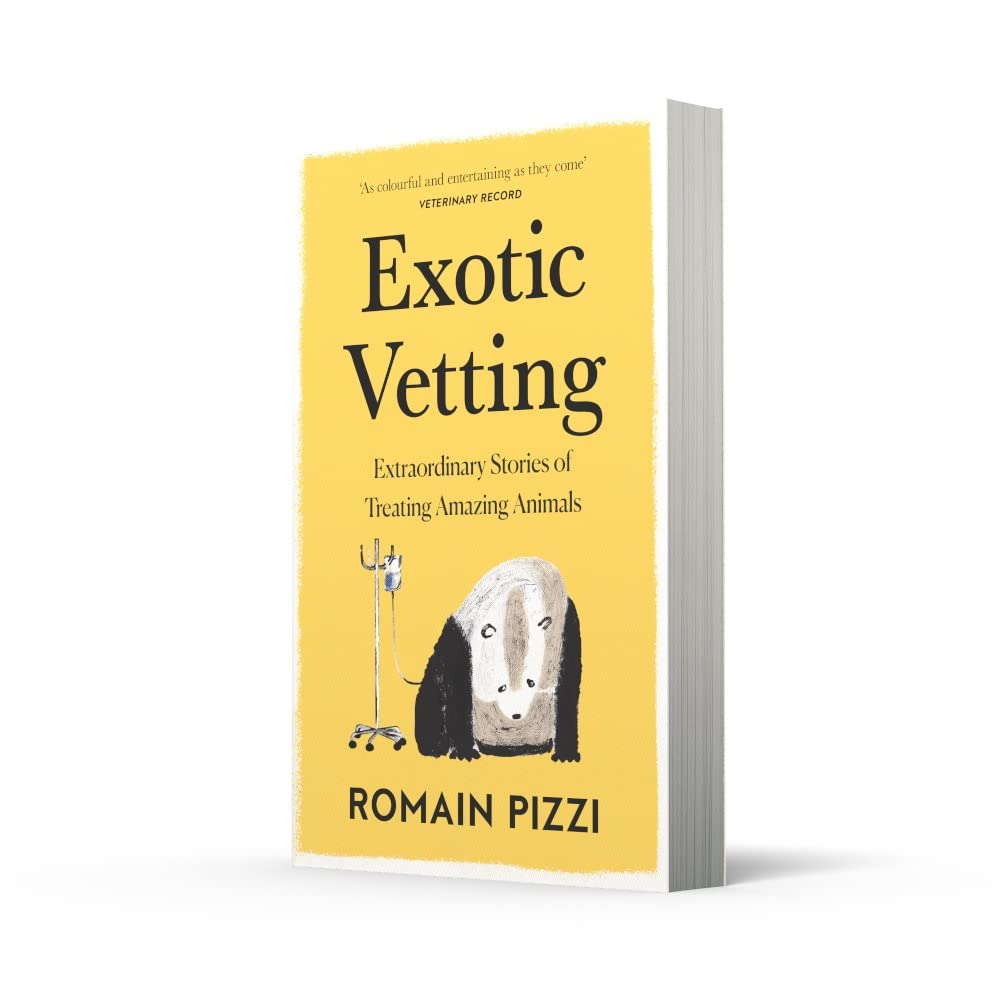
He plays the cello - Bach Cello Suites - “to destress”, as well as a variety of other instruments, including jazz harmonica - “it fits easily in my luggage” - double bass, and the trumpet, which he taught himself to play during the pandemic. He likes to do wood engraving and wood prints, carving bits of wood - sometimes from the places he has travelled - with old surgical scalpels. He reads widely and has written a book - Exotic Vetting: What Treating Wild Animals Teaches You About Their Lives - about different aspects of wildlife work, and will hopefully finish another in the next two years.
There are still “things I would like to solve”, in particular keyhole surgery in dolphins, he says. “They are very challenging patients who are difficult to anaesthetise, their wounds tend to break open, and they can die quite quickly. I would really like to develop techniques that give them better treatment,” he says.
To surgeons dealing with challenges at work, who are “feeling frustrated because they want the newest piece of equipment or because the anaesthesia was a bit slow on the day”, things could be more difficult, he suggests. “Maybe take some comfort that your patient isn’t being very uncooperative and trying to eat you.”
Most surgeons he has worked with are “very supportive and fascinated with what I do, and it does give them pause for thought”, he says. “They’ll ask things like: ‘How do you do an endoscopy on a tiny bird that weights 50g?”, or “Can you put a bandage on a tiger?’ - the answer is generally, ‘no you can’t’.” Romain says his work also “makes them appreciate the good and the bad bits of their jobs”.