A surgeon and breast cancer survivor is urging surgeons to consider her ground-breaking technique for preserving sensation during mastectomy and implant reconstruction.
Dr Anne Peled and husband Dr Ziv Peled created the innovative approach after she was treated for breast cancer.
Their new approach combines advancements in breast oncology, reconstructive surgery and peripheral nerve techniques.
By introducing the concept of nerve preservation and grafting, surgeons can now offer patients the opportunity to retain sensation following immediate implant breast reconstruction.
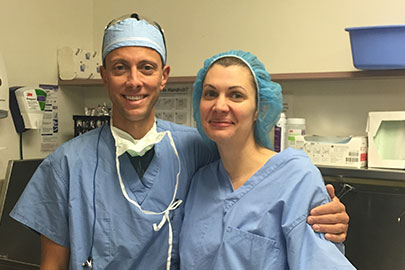
Anne Peled is a board-certified plastic surgeon practising aesthetic, reconstructive and breast cancer surgery in San Francisco, US.
Anne was diagnosed with breast cancer just a few years into starting her breast cancer and plastic surgery practice. She chose a lumpectomy because she could not face the prospect of losing sensation if she opted for a mastectomy and implant reconstruction.
As a result, Anne and husband Ziv, a peripheral nerve and plastic surgeon, discussed how they could combine their skills to preserve and restore sensation during mastectomies and implant breast reconstruction for other patients.
Now the couple are pioneering their new technique that preserves the nipple, skin and the sensation with manageable recovery and hospital time.
Speaking to Apple News, Anne said she believes surgeons play a crucial role in guiding patients through their treatment journey – and suggests it is vital to address any psychological impact of these procedures.
She said surgeons must inform patients about the emotional and intimate aspects, such as a sense of self and femininity.
Referencing studies that reveal a significant decline in overall sexual health for those who have undergone breast cancer treatment, she said mastectomy is often associated with feelings of disfigurement and conflicts between self-perception and body image.
‘As a surgeon and breast cancer survivor, I understand the profound impact this issue can have on lives. Having personally faced the decision-making process, I empathise with those who fear losing sensation, especially at a young age. I chose an alternative surgical option to preserve sensation and maintain a positive quality of life,’ she said.
The breakthrough is encouraging for individuals diagnosed with breast cancer and those considering preventive mastectomies.
She added: ‘As awareness of this ground-breaking technique spreads, more breast cancer patients and previvors can confidently opt for sensation-preserving mastectomies.’
She maintained that surgeons should not only focus on raising awareness about breast cancer but also take proactive steps to support patients who have battled this disease and that understanding the long-term impact of breast cancer treatment is crucial.
‘By embracing innovative approaches and training in nerve preservation techniques, we can empower our patients to move past breast cancer and embrace life fully,’ she said, adding that sensation-preserving mastectomies ‘represent a beacon of hope for countless patients’.
Posting on Instagram recently, Anne wrote: ‘One of the questions I get asked most often about sensation-preserving mastectomy is why we’ve been offering these surgeries for nearly five and a half years – and yet there are still so many centres that don’t offer it.
‘Like so many new techniques or approaches in medicine, I think it’s a combination of lack of training, reluctance to learn something new and carve out the space to implement it and healthcare systems not optimised for big changes.
‘But fortunately there are now many centres and surgeons who are willing to work to overcome these obstacles to allow people to feel like themselves again after mastectomy and not have to live the rest of their lives numb.’
Breast cancer caused 685,000 deaths globally in 2020, according to the World Health Organisation.
Commonly chosen by those diagnosed with breast cancer or individuals at high risk due to genetic mutations or family history, a mastectomy can leave patients with little to no sensation in the breasts or nipples.
Sensation-preserving mastectomies can be offered to those diagnosed with breast cancer or those at high risk for future breast cancer and are considering prophylactic mastectomy.
Sensation preservation at the time of mastectomy involves saving nerves when oncologically safe and/or reconstructing nerves that need to be cut during the mastectomy.