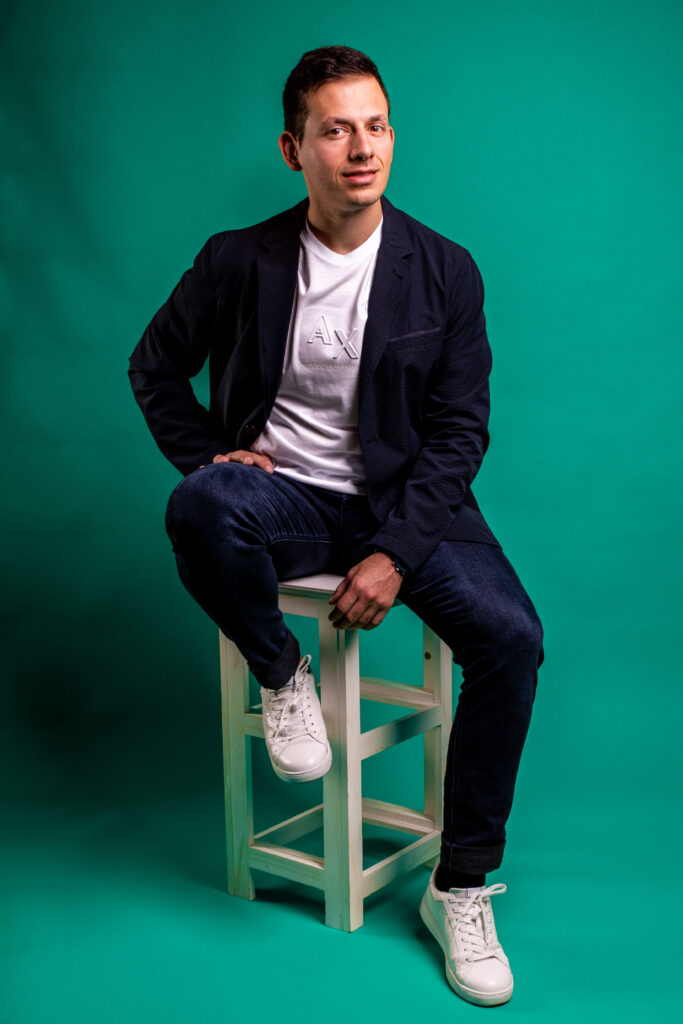
Dr Dylan Attard is a trainee surgeon turned entrepreneur who leads the MedTech World, a global series of events and opportunities bridging the gap between digital health, medical technology and innovation.
His change of direction mid-training is a bold step for a first-generation surgeon whose parents heavily supported him. Unsurprisingly, there was a lot of soul-searching involved. But Dylan is a driven man, it appears. Forging ahead, he bravely ditched a promising career to follow a personal vision. His mission is to revolutionise global healthcare by championing innovative technology through entrepreneurship to impact patients worldwide positively.
Dylan is at the forefront of fostering partnerships and pushing boundaries. As the MedTech World enters its fourth year, he is excited about expanding the flagship event in Malta and adding a series of global roadshows, each designed to connect start-ups with investors and foster collaborations that could redefine the future of healthcare. But how equipped is he to take on this challenge? And do the skills honed in the operating room translate effectively to navigating the complexities of running a global business?
Here, Dylan shares his story of transitioning from a promising medical career to co-founder and CEO of an international conference brand. He touches upon his vision for the future of MedTech World and reflects on lessons learned along the way.
Why the career shift?
I’ve always loved surgery. Whilst I miss its adrenaline rush and buzz, I felt restricted working in a hospital, tending to one patient at a time. I enjoy networking, venture funding events and the purity of the medtech industry. It was only natural for me to follow the path to entrepreneurship, and MedTech World has allowed me to put myself on the global map to influence healthcare internationally. It has been five or six years, and I have never looked back.
How does a medical background influence your approach?
I’ve worked in diverse healthcare environments, from training in a Maltese hospital to placements in the UK and Germany. I’ve practised in multiple hospitals, observed various systems and experienced different approaches to teaching and operating. This has given me a unique perspective on the international healthcare system – its needs, shortcomings and, sadly, its lack of entrepreneurial spirit. I’ve seen how understaffed, overworked and demotivated healthcare professionals often are. I want to change this by connecting start-ups with investors, enabling them to scale globally, raise funds and bring their solutions to market. Communication is the common denominator. As a doctor, I learned to speak directly with people, understand their needs in various languages and terminologies, and ask questions strategically and methodically. These skills are invaluable when leading a team or managing a business. Surgery, trauma theatres and emergencies have exposed me to high-pressure environments. When people talk about the stress of entrepreneurship, it pales in comparison to these experiences.
What challenges did you face – and how did you overcome them?
My biggest challenge was breaking this news to my family, especially my parents. I was the first in my family to become a doctor, and they had sacrificed so much to support me through medical school. They had high hopes for my career, but now I was considering a risky change – leaving surgery for business and entrepreneurship. The possibility of failure also loomed large. Business ventures often fail, but would I regret not taking this chance 10 years from now? Would I be satisfied with staying in surgery just because it was the safe path? It took me months to decide, so it wasn’t a choice made lightly. I spent a year and a half juggling my surgical training and preparing for my Royal College of Surgeons exams while laying the groundwork for my transition into the business.
Any advice for those who might follow?
Life begins outside your comfort zone. Think strategically and take risks, but make sure they’re calculated. Don’t be afraid to fail. Entrepreneurship is far from easy. I work longer hours without the predictability of a fixed schedule. I’m always engaged – surfing LinkedIn, reading articles, sending emails, planning, and coordinating teams globally. We operate in four time zones, including Asia and the US, so from the moment I wake up to when I go to sleep, someone on my team is working on something. You’re constantly leading, guiding and growing your business.
What do you miss – and not miss – about the OR?
I certainly don’t miss the shifts lasting more than 36 hours straight, nor the bureaucracy that comes with healthcare systems, such as the endless administrative work and the inter-departmental conflicts. I’m happy to leave those behind. What frustrated me was how the healthcare system sometimes leaves you feeling helpless to save a patient. Whether it was due to the mountains of paperwork, the red tape, or the rigid bureaucracy, I don’t miss that sense of helplessness. I always wanted to do my best for every patient, but the system often made that difficult. However, I miss helping patients, being the first on the scene for emergency surgeries, and making critical diagnoses in urgent situations. I miss the moments when you can tell a patient, ‘We managed to do the operation; it was a success. We’ve removed the cancer, and you should be good to go.’ Those times meant the world to me.
How important is branding? Are you comfortable being the face of MedTech World?
I have never sought attention for its own sake, but I’ve learned that people connect with personal brands and stories. I don’t want MedTech World to be just another event or branding conference. I want it to be recognised as something deeply cared for by someone who has dedicated their life to studying and working in medicine and surgery. But in today’s world, branding is essential.
How challenging is it to attract investment from big players?
Confidence and clarity can outclass the competition; people are always willing to invest in a compelling start-up, product, or project. Today’s political and financial climate might make it difficult, but I stay focused on the positive. If you have a firm idea, know where you are and where you want to be, understand what you’ll do with the money, and see who you’ll be helping, I believe you’ll find investors willing to support your vision.
What thoughts on the rapid development of surgical technology?
I’m genuinely excited, especially about advancements in robotic surgery. Many of our surgical practices and operating rooms are outdated. There’s a critical need for innovation, which should come from the surgeons and healthcare practitioners working in these environments daily. That’s why I advocate for entrepreneurship within hospitals. Hospital administrators and department heads must create environments that foster creativity and innovation. If they do, it can lead to smoother workflows, reduced inefficiencies and, ultimately, better patient outcomes.
Are you optimistic about the future of surgery and healthcare?
We’re witnessing a growing trend where governments and public funding are directed towards evolving healthcare ecosystems. The demands of patients and populations primarily drive this shift, and people now expect more from their healthcare experiences. A few years ago, we became accustomed to managing our finances or shopping for groceries online. Everything from ordering food to virtually every aspect of our lives is digitalised. Healthcare has traditionally lagged behind these other industries. But this is changing. The pandemic has significantly altered how people think and what they expect from their healthcare systems. As a result, there's a strong push for more innovation and investment, especially in surgical fields. I see this as a positive development, potentially bringing about significant advancements in surgery and beyond.
And if this venture fails to succeed?
Success and failure depend on how they’re defined. I would never consider any part of this journey a failure because we have already accomplished so much. We’ve hosted global events, touched every continent and connected start-ups with investors, service providers and hospitals. Even if we stopped today, our story would be a remarkable success. We’re also working to highlight the medtech industry and encourage more investment from the global financial sector. Although medtech often gets overlooked by venture capitalists for its slower ROI compared to software, I would still consider Medtech World a success if we paused operations. And, anyway, we’ve gained invaluable knowledge – and I’ve grown personally in so many ways.
- MedTech Malta will take place from 6-8 November 2024. For tickets and further information, click here.