Part of the Talk Surgery series of webinars
A ground-breaking webinar that unveiled The Future of Surgical Robotics attracted surgeons from across the globe to the first in a series of educational experiences.
Surgical International, the leading source for surgical news, in collaboration with Orascoptic and The Royal College of Surgeons of Edinburgh, hosted its inaugural surgical webinar last week (Thursday, 15 February).
The event kicked off an exciting Talk Surgery educational series, attracting registration from 1200 delegates from all specialties and across 82 countries.
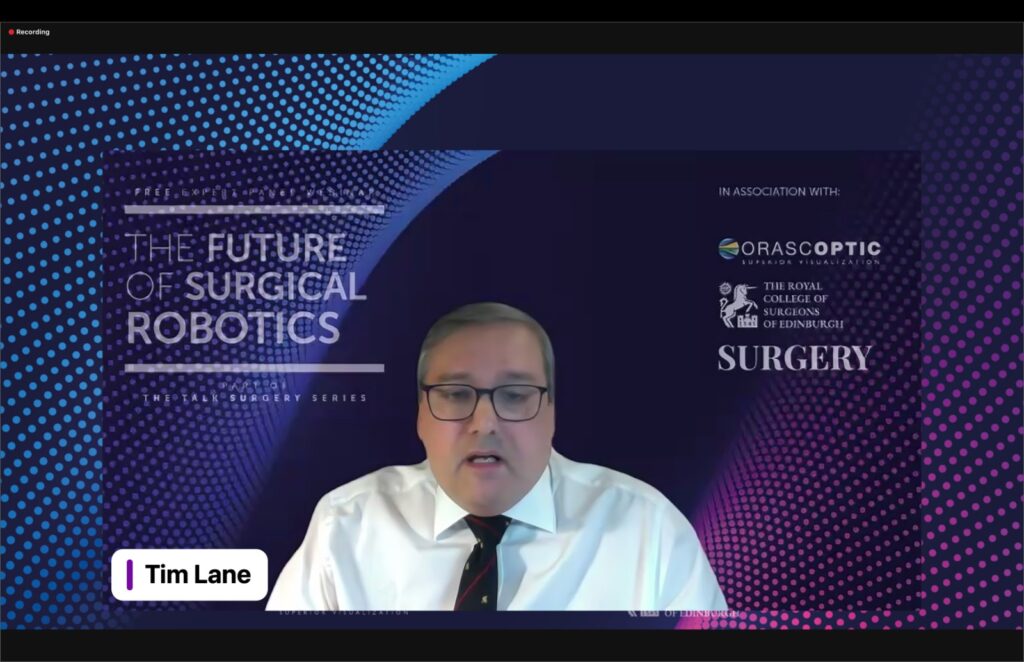
The webinar served as a platform for experts to discuss the latest advancements in surgical robotics.
Professor Shafi Ahmed, also known as the world’s most-watched surgeon, hosted the event.
The panel - composed of leading robotic surgeons and industry experts from around the globe - delved into various aspects of robotic surgery which ranged from technological advancements to its integration into healthcare institutions around the world.
It considered the challenges and prospects of robotics in surgery, providing insights into the current landscape, emphasising collaboration, affordability, technological advancements, AI integration and sustainable practices within surgery.
Tim Lane, Consultant Urologist and robotic surgeon at Lister Hospital, Hertfordshire, UK; Bhavan Rai, Consultant Urological surgeon at Freeman Hospital, Newcastle, UK; and Peter Vaughan-Shaw, Consultant Colorectal surgeon at the Edinburgh Colorectal Unit in Scotland, shared their thoughts on the latest developments in robotic surgery.
Industry leaders Paul Gibbons, managing director UK of Corin Group, and Tom Shrader, founder and president of R2 Surgical, provided valuable perspectives on the future direction of robotic surgery and its impact on healthcare delivery.
Key topics included preserving traditional surgical skills alongside technological advancements, challenges in medical product development, collaboration for data analysis and technology, and making robotic surgery more affordable and accessible.
Participants explored the potential of artificial intelligence (AI) in surgical techniques, its applications in cancer prediction and surgical training and its role in enhancing surgical precision and outcomes.
The discussion also touched upon the advancements in neurosurgical cranial robotic surgery and the hybrid model for medical training.

Key takeaways
- Preservation of skills and collaboration: Speakers emphasised the importance of maintaining traditional skills alongside advanced technology and promoting collaboration between different medical fields.
- Challenges in product development: The panel discussed ongoing challenges in medical product development, including high investments and regulatory hurdles.
- Collaboration for data analysis: The need for collaboration with surgeons and data analysis experts was highlighted, exploring the use of data for future intelligence targets in orthopaedic robotics.
- Affordability of surgery: The panel explored strategies to make surgery more affordable through incremental changes in techniques, data analysis for predicting outcomes and efforts to reduce maintenance costs.
- Global impact and support: The panel looked at initiatives to provide remote support and cost-effective solutions to hospitals worldwide, focusing on maintaining and operating equipment efficiently.
- Advantages and challenges of robotic surgery: The panel covered the advantages, such as shorter recovery times and less pain, but also the challenges, including cost-effectiveness and effectiveness compared to traditional methods.
- Integration of AI: There was a discussion on the intersection of robotic surgery and AI and how it can enhance surgical precision, predict outcomes and improve training.
- Advancements in technology: Digital surgery, 5G-enabled operations, and the potential of AI in cancer prediction and surgical training were highlighted.
- Ergonomics and comfort: Speakers noted the improved ergonomics of robotic surgery for surgeons, contributing to their wellbeing during procedures.
- Training and education: Speakers discussed the involvement of trainees in service provision, hybrid models for medical training, and the promotion of robotics in colleges and associations.
The webinar concluded with a call for promoting robotics in colleges and associations.
The Future of Surgical Robotics webinar provided a comprehensive overview of the current landscape and prospects of robotic surgery, setting the stage for further exploration in subsequent sessions of the Talk Surgery series.
Click here to watch The Future of Surgical Robotics webinar
Next month’s webinar focuses on sustainability and practices that could help surgeons and their teams achieve net zero. Book your place here.
Connecting surgeons across the world to improve outcomes and inspire the next generation of surgeons. Surgery International attracts subscribers from 138 countries.