The era of the maverick surgeon is over – exceptional clinical leadership in the 21st century demands strong communication skills and the ability to listen to colleagues. In essence, the strength of excellent leadership lies in integrated teams.
Effective leadership requires a cultural shift within organisations, and surgeons can only help foster a healthy, innovative environment by encouraging openness and addressing systemic issues.
These were the take-home messages from Surgery International's latest webinar, the fifth instalment in its Talk Surgery series, which took a no-holds-barred look at the current state of surgical leadership.
The webinar provided its global audience a unique educational experience, focusing on leadership development, management, and the greater need for soft skills.
The Confederation of British Surgery and Surgical Events sponsored the webinar hosted by Professor Shafi Ahmed, Consultant Colorectal Surgeon and CEO of Medical Realities.
Speakers included:
• Jamie Robertson, Assistant Professor of Surgery at Harvard Medical School and the Director of Innovation in Surgical Education at Brigham and Women’s Hospital
• Nora Colton, Professor of Leadership and Management for Healthcare, University College London
• Mark Slack, Chief Medical Affairs Officer and co-founder of CMR Surgical
• Denise Cafarelli Dees, Postgraduate Lead – Healthcare Qualifications – Healthcare Skills.
The panel addressed what leadership might mean for the surgical profession in the future – and considered how best to build cohesive leadership.
The surgeon’s role is changing – from being a ‘hardcore clinician’ to embracing soft skills and management techniques.
‘When we train to become surgeons, we’re very much operators, and our role defines us as surgeons. Yet many of us take leadership positions with little or no training. It’s only recently become more of a science, and more investments are being made in leaders to build their skill sets as we advance. It’s not an innate ability; we must learn from others, and we've seen increasing support for this approach,’ Shafi suggested.
Ownership and accountability now make the surgeon an ‘interesting beast’, noted.
‘It’s a multitude of faculties that require you to build on what you already have, to be able to lead as a surgeon in the OR, but also to work much wider and go up the management tree.’
Mark Slack acknowledged that ‘leadership wasn't taught at all’ in the past. ‘Everybody was an individual, and everybody knew the best according to who they were and the strength of their personality. Medicines had a couple of terrible examples of lack of leadership, leading to adverse outcomes for patients and the community.’
He advocates for a ‘leadership community’ that understands the importance of being supportive and results-oriented while listening to different perspectives.
He believes digital data and global connectivity are now driving strong leadership to ensure surgery is ‘back on track’.
Mark also cautioned against the idea that all surgeons needed to be leaders, and the panel debated this point later in the webinar.
Jamie Robertson shared her perspective as head of Harvard’s first-of-its-kind one-year surgical leadership program. She believes surgeons sign up for it because they are searching for skills not ordinarily covered during surgical training.
Explaining how the program works – it has been running since 2018 – she said it teaches a wide range of topics, including balancing budgets, estimating costs and managing property and personnel – essential skills for running a hospital, department or entrepreneurial enterprise.
The program also focuses on personal management, such as developing leadership skills and managing employees inside and outside the operating room. It includes extensive business case discussions, some specific to surgery and others covering broader topics, to help participants apply these skills in a medical context.
Graduates of the program are then encouraged to think about how these skills can help them become administrators or entrepreneurs, apply patient safety practices beyond the operating room, and create practical proposals for hospital administrators and the C-suite to create patient safety systems.
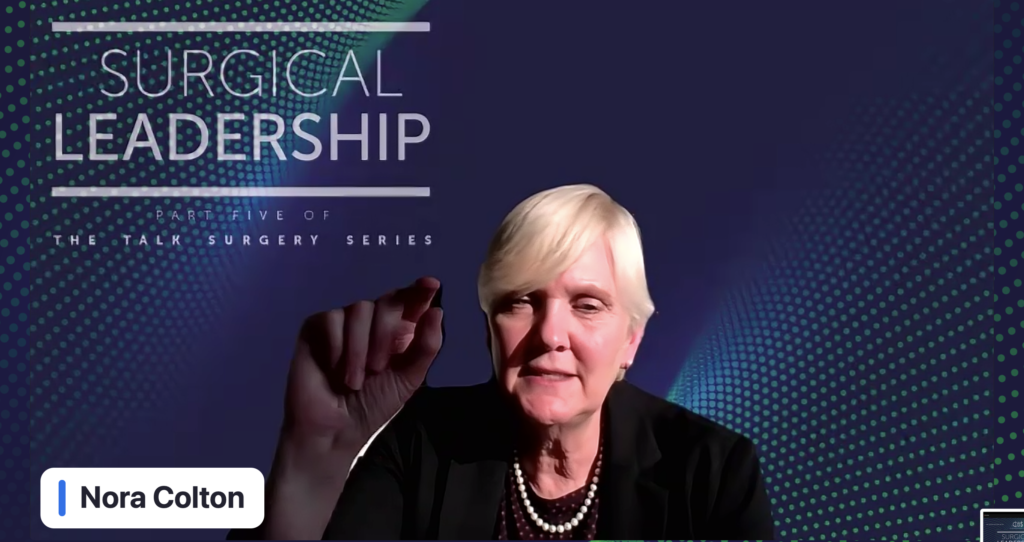
Nora Colton built Global Business School for Health – UCL, one of the world's first global business schools for health in the UK and believes technology is driving much of the change in healthcare.
Designed to elevate the global impact of healthcare delivery and transform healthcare access, experience, and outcomes worldwide, it empowers healthcare management leaders of the future through high-quality education.
She observed: ‘When we talk about surgery, we’re not talking just about the operations or the operating room; we're talking about the pre-op, the post-op, and the people we're employing now in our healthcare system are changing.
For her, one critical aspect is equipping the next generation with the skills to think ahead. Significant considerations include how AI, robotics and data science impact surgery.
‘Even within the leadership and management domain, we've spent too much time focusing on the individual,’ she said. ‘We need to shift that narrative to more about teaming and teams.’
For her, the strength of excellent leadership lies in integrated teams. She suggested that leaders who demonstrated flexibility, fostered collaboration and actively listened to their teams, encouraging them to speak up, achieved greater success.
Denise Cafarelli Dees works with surgeons from an industry perspective. And, although she considers it an ‘exciting time’, she acknowledged that she has sometimes had cause for concern in the past due to a ‘hierarchical, maverick surgeon trying to bulldoze changes through and forgetting the basics of leadership’.
She explained, ‘Leadership isn't a one-size-fits-all. Working with individual entrepreneurs in the different hospitals, I ensure they fully understand change management. To achieve change management, I have to put on my communication skills hat, a core of leadership and a human factor we cannot forget. If we don't have some of these core skills under the leadership umbrella, we will still put patients at risk.’
She suggested that communication, situational awareness, information gathering, and identification are crucial. Denise also believes it is essential to adjust and respond appropriately, make sound decisions, and adapt leadership style.
The panel agreed that surgeons can be dynamic clinical leaders who show support and empathy for colleagues and make changes for others around them.
Surgeons can be change-makers, building teams with an adaptable and flexible mindset.
Mark Slack’s experience with Cambridge Medical Robotics (CMR) was used to discuss the differences in leadership and innovation between industry and the UK’s NHS. Key points included:
- Industry vs NHS leadership: In industry, leadership is characterised by innovation, risk-taking and a net-positive approach to society. Conversely, in the NHS, leadership often values compliance and discourages challenging the status quo, which can hinder authentic leadership and innovation.
- Encouraging innovation: Shafi emphasised the importance of considering all ideas, no matter how unconventional, before dismissing them. This approach, he felt, can foster innovation and positive outcomes.
- Challenges in the NHS: The NHS’s leadership has traditionally been criticised for promoting compliance over innovation, leading to poor outcomes and a lack of proper leadership qualities. Issues like poor whistleblowing practices further exacerbate these problems.
- Supporting leaders: Leaders in clinical practice face significant stress and burnout. Practical leadership training should include self-care and stress management to maintain wellbeing and effectiveness.
- Leadership development: Short courses and practical experience are essential for aspiring leaders, especially those from lower-income countries. Continuous learning and reflective practice can help develop leadership skills without expensive programs.
Summing up the hour-long panel discussion, Shafi noted: ‘Leadership changes with the culture you’re in and the conditions you might have in the hospital; it's very flexible. You must be receptive to what you're dealing with, your working ecosystem and the individuals involved. You have to be resilient.’
You can watch the whole webinar here.
The next webinar in the is on Thursday, July 18. A panel of experts will discuss the world of 3D printing in surgery – from planning surgeries to a new shift in creating apparatus, appliances, and prostheses and how these are used in everyday surgical practice.
Surgery International fosters a collaborative community of surgeons worldwide and boasts 18,000 subscribers across 140 countries.